Have you been weighing up container glamping vs shepherd’s hut for your business? If you’re researching glamping accommodation for your site, you’ve probably noticed something interesting happening in the UK market. The shepherd’s hut – long considered the quintessential glamping unit – is facing some serious competition from other solutions including luxury container conversions.
We’re not here to say one is definitively “better” than the other. But if you’re weighing up container glamping vs shepherd’s huts for your business, there are some important differences worth understanding. Let’s walk through what we’ve learned from working with glamping sites across the UK.
What Today’s Guests Are Looking For
The glamping market has matured significantly. While shepherd’s huts still have their devoted fans, we’re seeing a clear shift in guest preferences – particularly among the 25-44 age group who tend to book longer stays and spend more on-site.
These guests are drawn to contemporary design. They want floor-to-ceiling glass doors that blur the line between inside and out. They’re looking for inspirational space and that industrial-chic aesthetic that photographs beautifully (yes, Instagram still matters for bookings and TikTok is catching up fast).
This doesn’t mean rustic is dead – far from it. But the definition of “luxury glamping accommodation UK” has evolved. It’s less about wood-burning stoves and gingham curtains, and more about feeling like you’re in a boutique hotel room that just happens to be surrounded by nature.
The Practical Stuff: Longevity and Maintenance
Let’s talk about what happens a few years after installation.
Shepherd’s huts are typically timber-framed, which gives them that authentic, traditional feel. The downside? In the UK’s damp climate, they require consistent maintenance. Without it, you’re looking at potential wood rot, warping, and weather damage. Most owners report significant wear within 10-12 years, even with good care.
Converted shipping containers are built from Corten steel – the same material designed to spend decades at sea. When properly converted with marine-grade treatments, they’re remarkably low-maintenance. We’re talking a 25+ year lifespan without major structural work.
For site owners, this translates to fewer weekends spent repainting and resealing, and more time actually running your business.
Year-Round Bookings: The Real Revenue Driver
Here’s where things get interesting for your bottom line.
Shepherd’s huts can struggle with shoulder season bookings. The narrow footprint and curved walls make it challenging to achieve the insulation levels needed for genuine winter comfort. You might get bookings from September to March, but occupancy tends to drop significantly for the rest of the year.
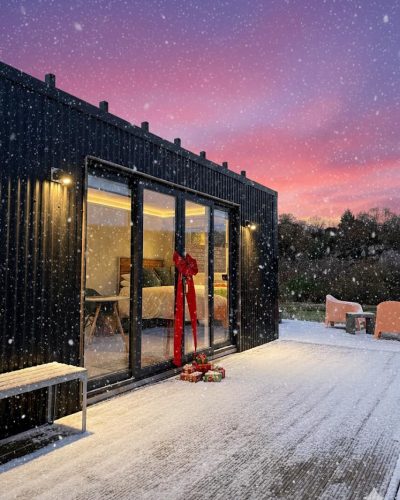
Containers, with their superior thermal mass and capacity for high-spec spray foam insulation, can genuinely deliver year-round comfort in an energy efficient way. This means you’re not just selling “summer getaways” – you’re capturing the lucrative Christmas market, Valentine’s breaks, and cosy winter weekends. All great for the Instagram or TikTok market.
The Numbers: Glamping ROI Matters
Let’s be honest about the investment. When comparing glamping ROI potential, here’s what we’re typically seeing:
| Feature | Shepherd’s Hut | Luxury Container (20ft) |
| Initial Investment | £30,000 – £80,000 | £23,000 – £34,000 |
| Avg. Nightly Rate | £120 – £180 | £140 – £250 |
| Occupancy Rate | 55% (Seasonal) | 75% (Year-round) |
| Maintenance Cost | Moderate/High | Low |
| 5-Year Est. Revenue | ~£150,000 | ~£265,000 |
So Which Should You Choose?
If you’re drawn to traditional aesthetics and planning a small-scale, heritage-focused site, shepherd’s huts can be absolutely charming. They have their place, particularly in certain locations where that rustic appeal is part of the story.
But if you’re approaching this as a business – if you want strong glamping ROI in 2026 and beyond, minimal maintenance headaches, and the ability to attract premium bookings year-round – containers offer compelling advantages.
The market data backs this up. Guests are increasingly seeking modern comfort wrapped in striking design, all while being immersed in nature. Container glamping delivers exactly that experience, with the durability and financial performance to match.
Ready to Explore Your Options?
Every site is different, and the “right” choice depends on your land, your market, and your vision. Whether you’re starting from scratch or looking to expand an existing glamping business, we’d be happy to talk through what might work best for your specific situation.
The glamping industry has evolved, and the accommodation units that perform best have evolved with it. The question isn’t really “which is better” – it’s “which is better for you?”